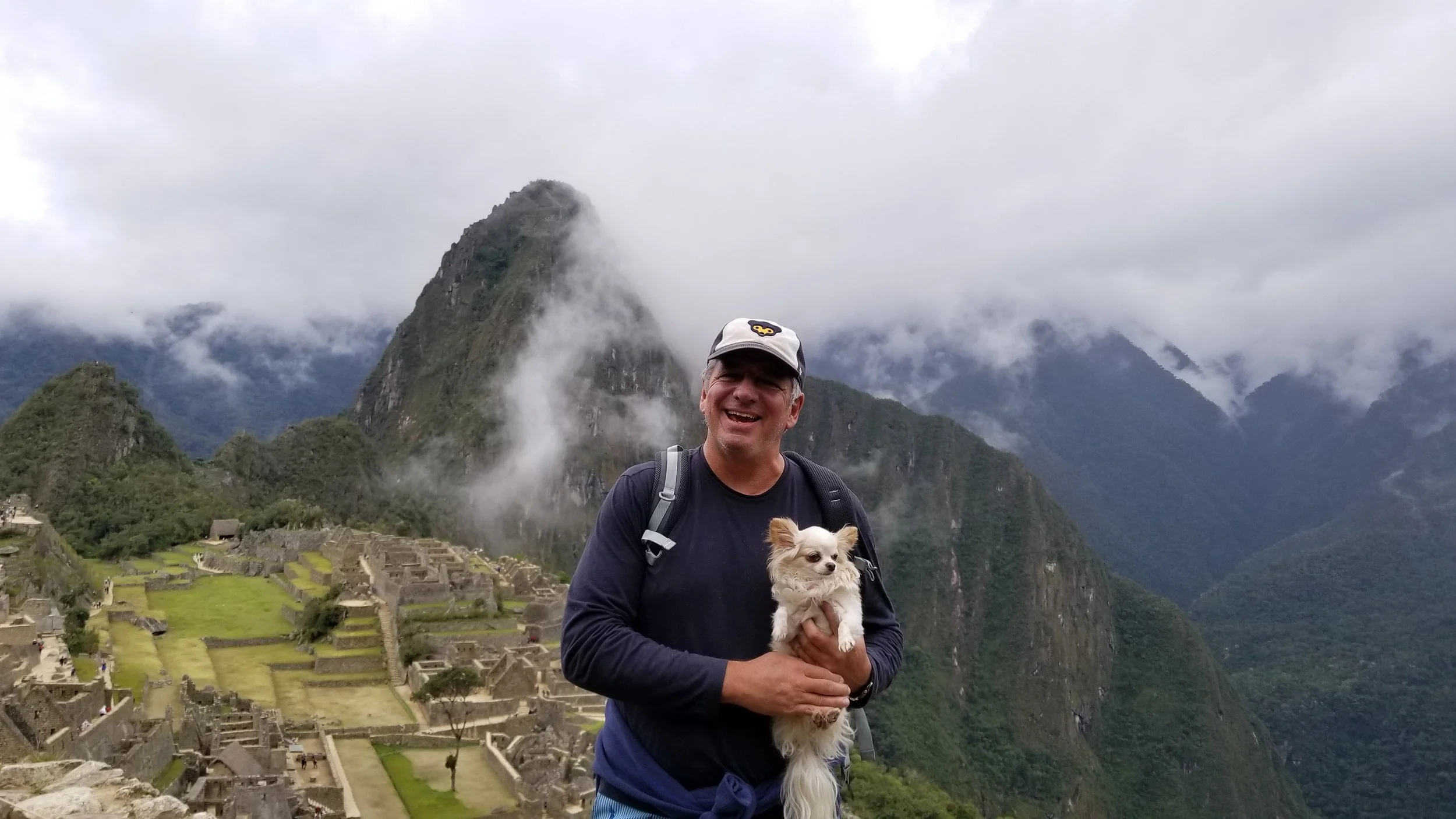
Machu Impossible
SHE DIDN’T ASK FOR PERMISSION TO BELONG
As we left the train station and navigated the maze of merchants separating us from Machu Picchu’s town square, Twinkles—the five-pound Chihuahua strapped into my backpack—was ready to add another entry to her already lengthy CV of unlikely Latin American accomplishments.
Approaching the square, she began to wrestle ever so slightly, her head peeking out of the backpack.
“Good dogs get to do fun things, tiny one.”
She had heard the phrase hundreds of times. It was her motivation.
Right on cue, she relaxed. This was just another aventura—going places and doing things nobody imagined a dog could do, especially one whose breed was practically synonymous with bad behavior.
Tickets purchased, we had only one piece of business to handle before boarding the bus for the 25-minute ride up the mountain to the sacred city.
“Twinkles, go pee.”
She casually climbed out of the backpack and, off-leash as usual, found the only patch of grass in the tiny town square. She squatted.
And declared squatter’s rights.
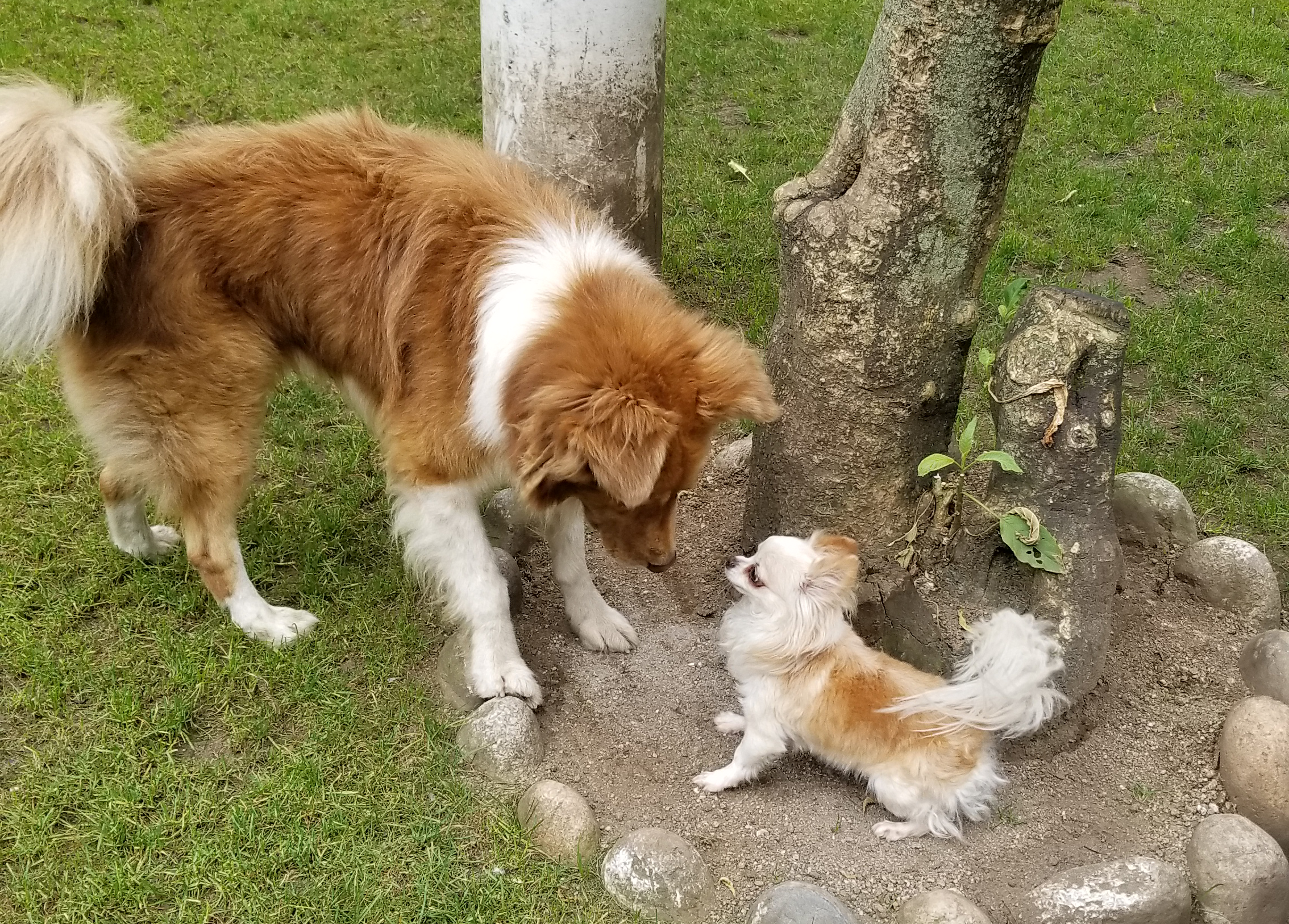
Seemingly out of nowhere, a Mucuchíes—a mighty local dog with a legendary lineage—strolled onto the scene. He wasn’t looking for a turf war. He simply seemed curious about the tiny, fearless furball who had just claimed his territory.
Twinkles responded by striking her full matador pose.
The square was crowded with tourists preparing to witness one spectacle, the Sacred City. Instead, they found themselves watching another.
One tourist took in the enormous dog, the tiny but utterly confident Twinkles, and panicked.
“Hey, aren’t you nervous?”
I glanced at the peaceful, curious encounter unfolding before us, then turned to the crowd.
“Nope. She’s just fine.”
Confidence Is Cultivated
As the bus climbed 1,300 feet from Machu Picchu town square to the Sacred City, most people were thinking, “How in the hell did the Incas haul those rocks up this hill?”
I took the time to reflect.
“How in the hell did a tiny lapdog, once terrified of the outside world, get this good?”
Good God, this pooch had a process.
WANT → CAN → DO
Before Twinkles could overcome the gravity of taking her first walk at age six, she had to discover that the world outside offered something worth risking her fear for. She had to move from being forced to do things I thought she might enjoy to wanting to do things she had never imagined possible.
For her first five years, life was confined to a king-sized bed—with her pee pads, food and water at its foot. All the while, an entire world had been waiting for her. Once she was liberated. Her awakening was immediate.
Wow, these smells are great. Chasing squirrels is fun! I want to go on a walk!
Despite the fact I’m so tiny, I can boss around the other dogs. I want to be La Jefa!
Oh, wow, I’m popular. Look at how everybody fawns all over me. I want to be La Princesa!
Her WANT set the direction. I guarded the progression while she built the CAN. Like her first trip to the dog park.
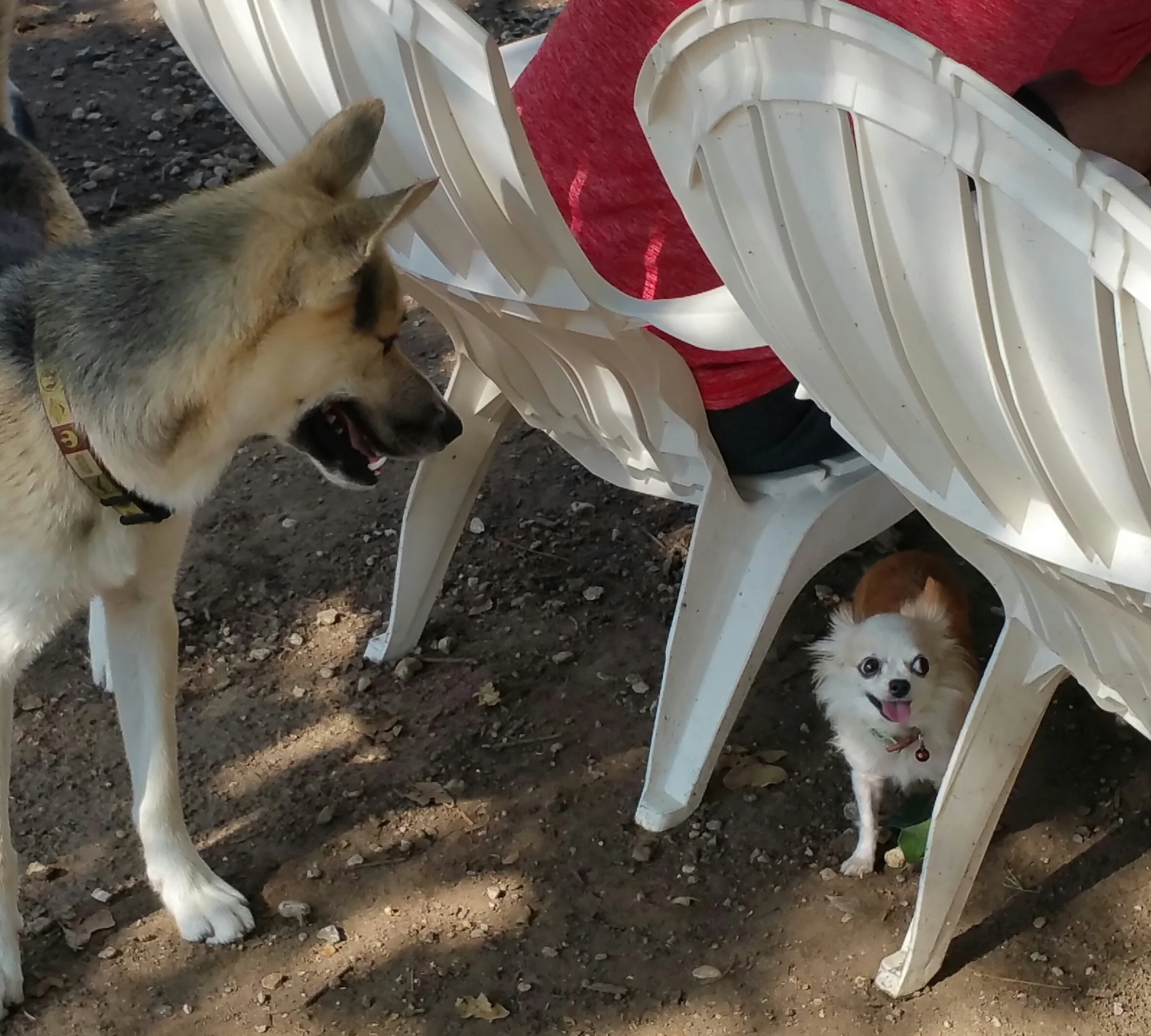
She looked around, intimidated but curious. “Well, this is where I belong, with my pack. I think?”
I couldn’t coach her on how to deal with a bigger dog. I don’t know “dog rules of engagement.” She had to figure those out herself.
When Twinkles faced discomfort I knew she could work through, I didn’t rescue her. I stayed close and gave her time. Each time she did, she learned: “I was frightened. I stayed. I figured it out.”
SHE FIGURED IT OUT. I WAS THERE.
The ocean was different. I could help her take the first step, but neither of us knew how far she could go. Her response to each step helped us discover the next.
“Okay, Twink. Those crashing waves look intimidating. Let’s wade in together first.”
Shaking. “Uh, Dad, I’m a chihuahua. We don’t like to swim in the ocean.”
“Or maybe nobody ever gave a chihuahua a CHANCE to swim in the ocean?”
“We’ll start fifteen feet out. I’ll put you in, stay right beside you, and you can ride the wave back.”
She rolled her eyes. “Okay.”
She rode the wave back, found her footing, and turned toward me.
“Now thirty feet. Two waves this time. I’m still right here.”
“Got it. This is kinda fun!”
WE FIGURED IT OUT. TOGETHER.
In both, my responsibility was the same: I didn’t guarantee her success. I protected her from predictable, damaging failure.
“¡Dale! We’re meeting some friends to catch the sunset.”
As the humans gathered to enjoy a spectacular sight in the distance, the dog spotted another attraction in the foreground — the surfers riding into shore.
I could see the wheels spinning …
“Good gravy! That ain’t happening! Chihuahuas don’t surf. And neither do I, for that matter.”
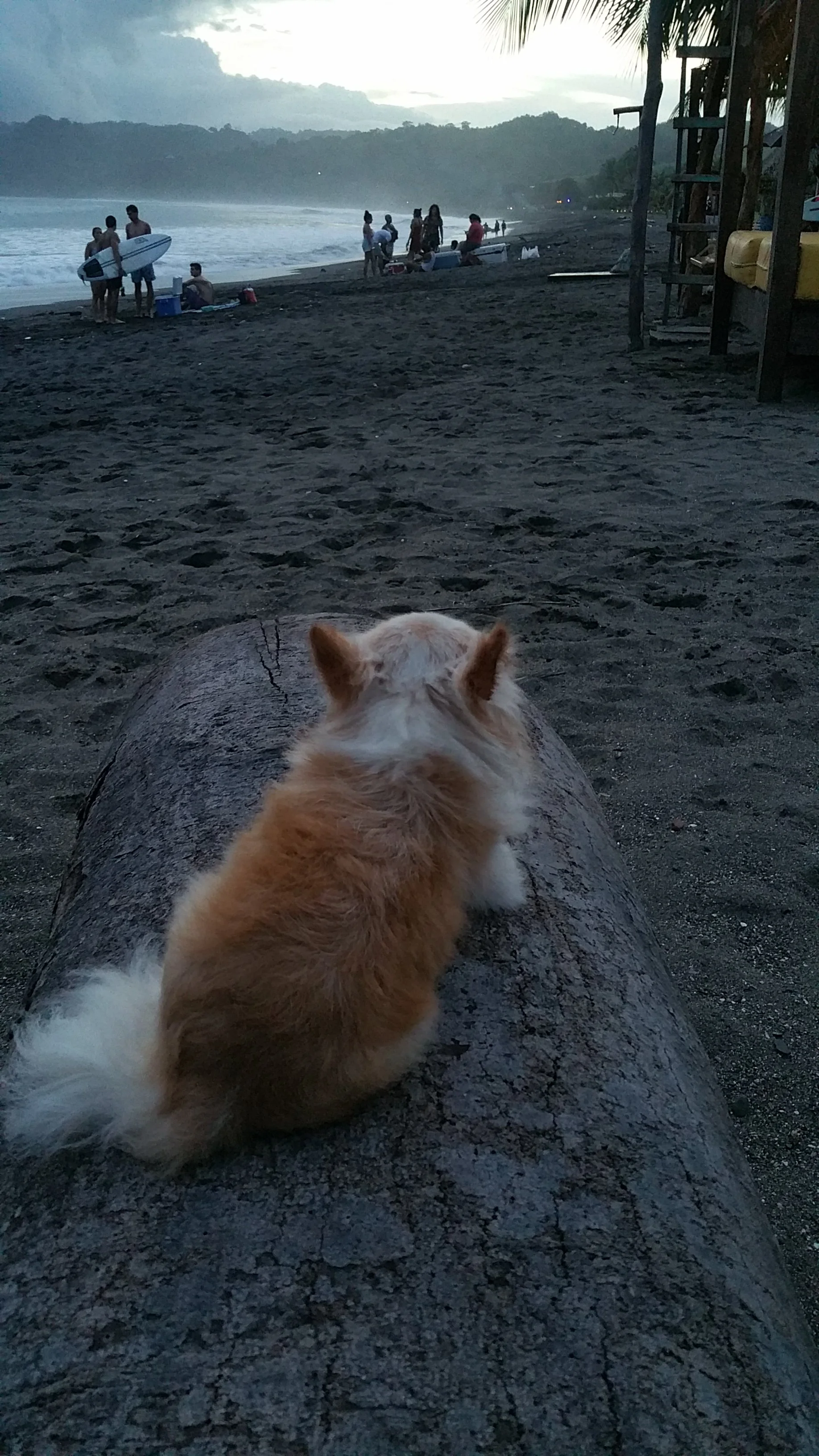
That was clearly the time for a hard no.
But more often than not, the answer was “Not yet.”
Each experience tested the outer edge of her ability. Each success moved that edge a little farther.
As her WANT kept growing
Her CAN began to catch-up
Finally, she was ready to DO
Tiny Dog Leaves Huge Pawprints in a Sacred City
By the time we reached Machu Picchu, she had done a drill LIKE THIS so many times before. But every cue told her this one was different.
The train ride. The crowds. The energy. Even my own intensity.
Prime entry time. Hundreds of people were pouring off buses and making the short walk toward the entrance.
“We have three different types of risk here tiny one. Entry risk, trail risk, and detection risk. Now technically there’s a fourth, acceptance risk …”
“But i NEVER have to worry about that one with you, sweetheart!”
“Okay, Twinkles. Backpack. FULL ZIP!”
Normally she’d roll her eyes. This time the confinement was met with confidence, “Got it Dad.”
About 20 meters before the gate, I stopped and let the human wave flow past me.
“Good new Twinkle. They’re not checking backpacks.”
The entry risk was all but eliminated. I just needed to choose the most chaotic lane, preferably one with a gatekeeper who appeared notably lax.
“Tranquilo, Twink. Almost there. No fuckin’ jostling around.”
What happened next was a blur. It happened so fast. Unconsciously.
I walked as quickly as I could, putting distance between us and any threat of immediate expulsion.
Fifty meters beyond the entrance, the simple path opened—and there it was. I unzipped the backpack, secured her leash and released her from confinement.
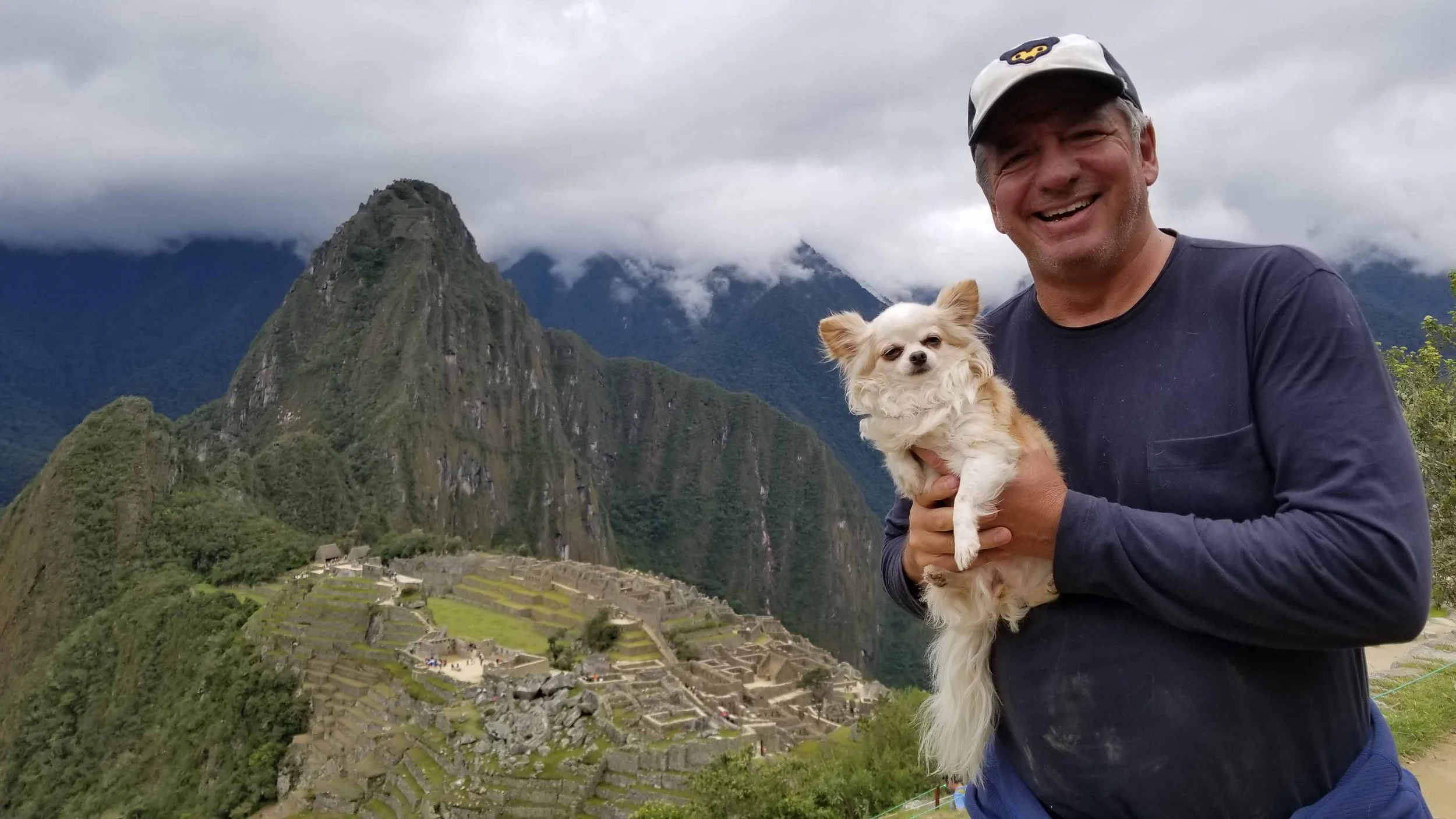
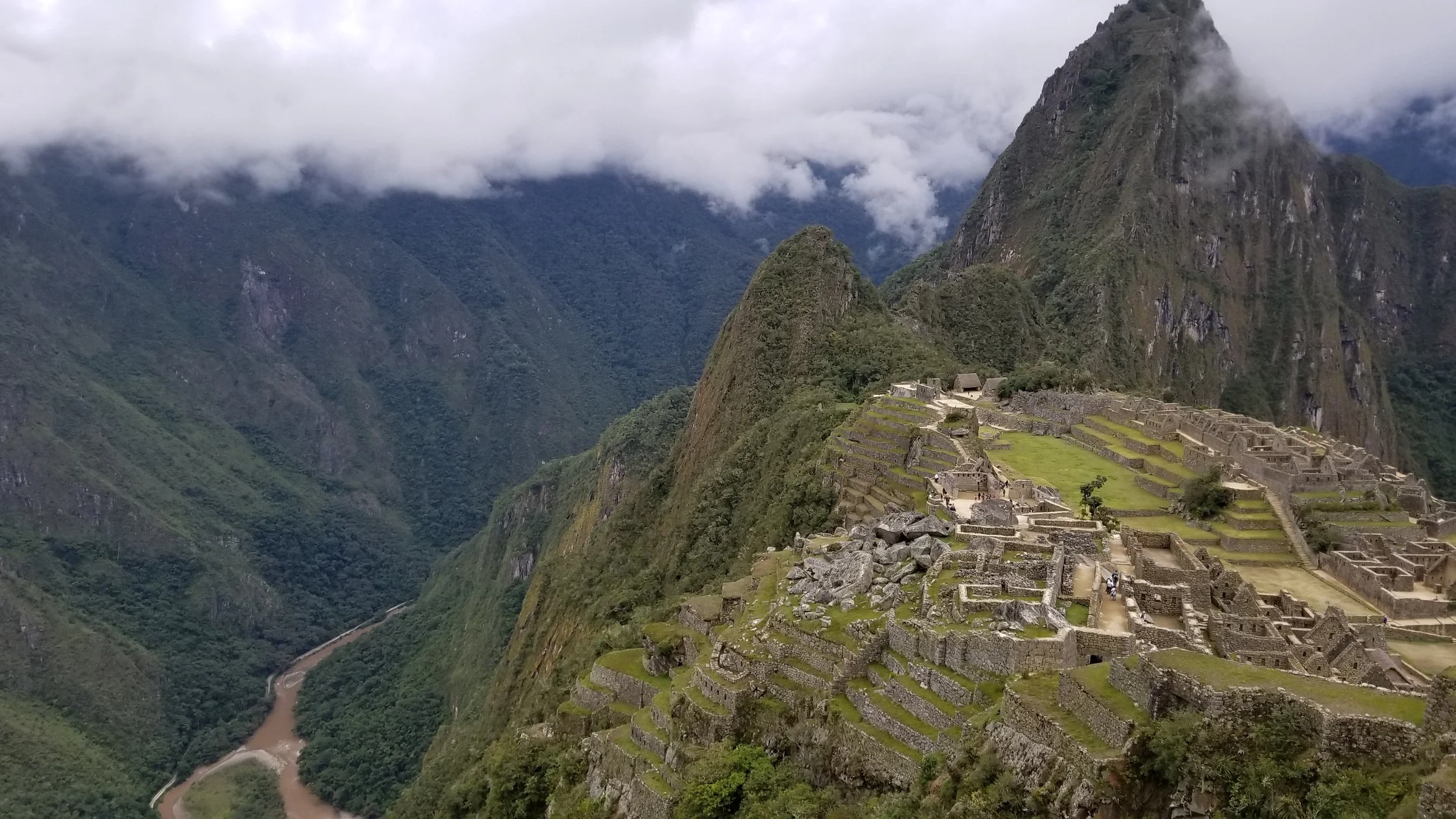
The first thing she saw was Huayna Picchu. Within moments, we were standing before the magnificent panorama of one of the Seven Wonders of the Modern World.
The day was perfect: cool, damp air and a few light clouds circling the mountain peak. I had feared the site would be overrun with tourists. Not that day. It never once felt crowded.
Visitors politely exchanged cameras, taking turns capturing one another’s dream photographs. All my energy was focused on getting ours. After all, our dream day was fragile, could be terminated at any moment.
Everyone felt urgency. Importance.
Unlike the humans, Twinkles wasn’t in awe of the view. She was more intrigued by the two strange things roaming in the distance.
“Yup Twink. Llamas it is.”
The five-pound Chihuahua scaled the irregular stone terraces with the determination of a mountain goat. She dug her paws into the loose pebbles and bounded up the steps with ease.
We bent down right between the two furry beasts. Click!
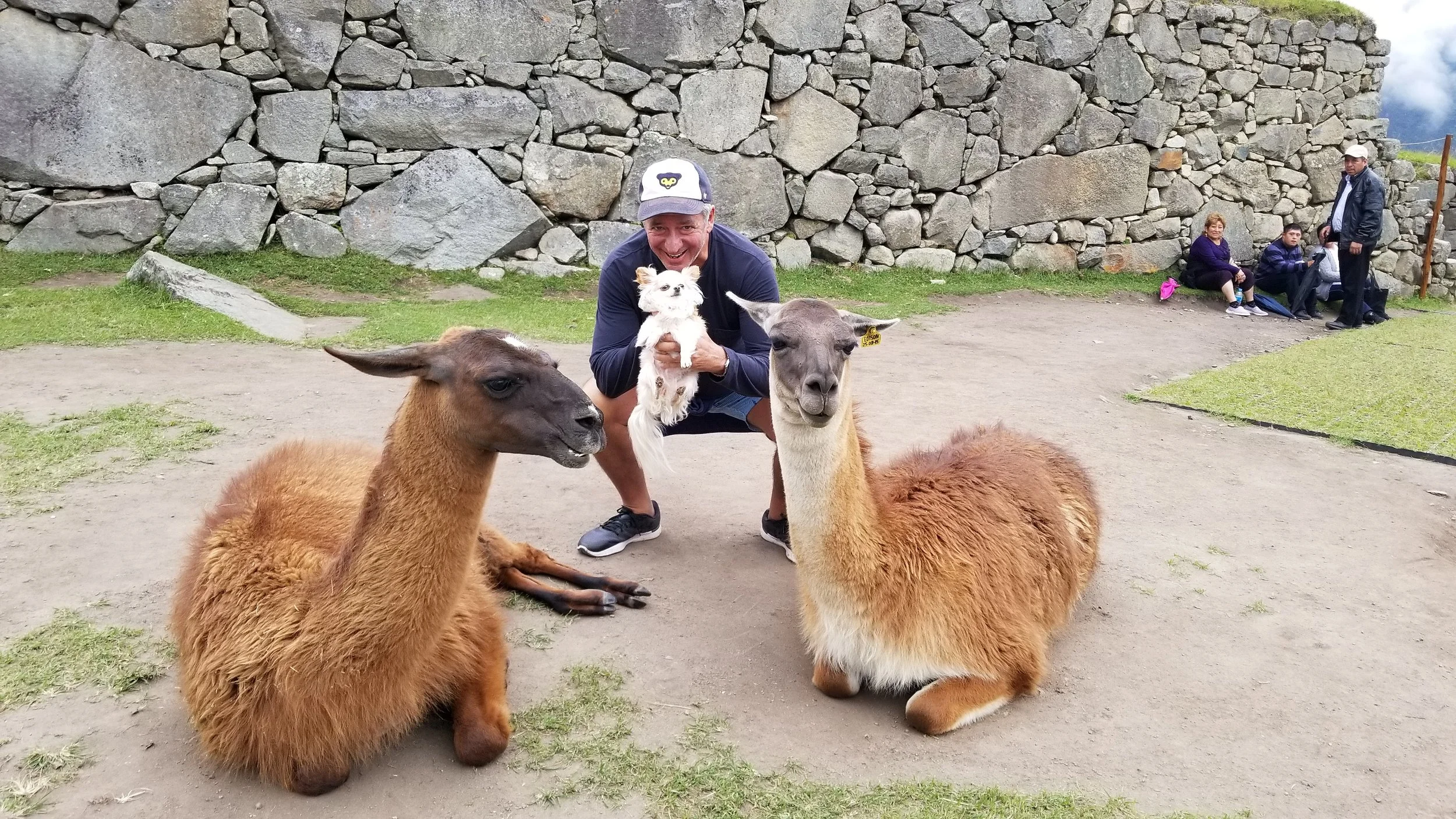
When the photographer handed back my camera, I stared at the image in astonishment. Either she had gotten extremely lucky, or she was a master at capturing not merely the subjects, but the entire scene.
Hands shaking, I looked at this miracle of a picture, “¡Mira Twinkle! These folks, over there, looking at you, smiling!” They weren’t simply astonished by the sight of a dog showing she belonged. They were genuinely delighted by her.
She brought an emotion rarely experienced in this historic site: JOY!
For the rest of the day, the aura of Twinkles glowed as brightly as the Temple of the Sun.
With the trails surprisingly untrafficked, we explored every path we could find—even the perilous route to the Inca Bridge.
“Hey Dad, why do you have to show then your passport to get into this trail?
“Because there is a chance we might not return. Dale!”
“Hey, Twink, just keep going forward. Whatever you do don’t look down.”
Risky. But we had been testing all kinds of all day just as big. The old man and his small dog enjoying this true wonder.
Wondering if we could get through the gate. Wondering whether fellow tourists would accept her. And still hanging over us, wonder whether a ranger would throw us out.
In the heart of that day, we stopped for a sandwich overlooking the Citadel. Twinkles, leading the way, seemingly recognized the accents of fellow Colombians.
“Amigos,” the perfect company with whom to celebrate.
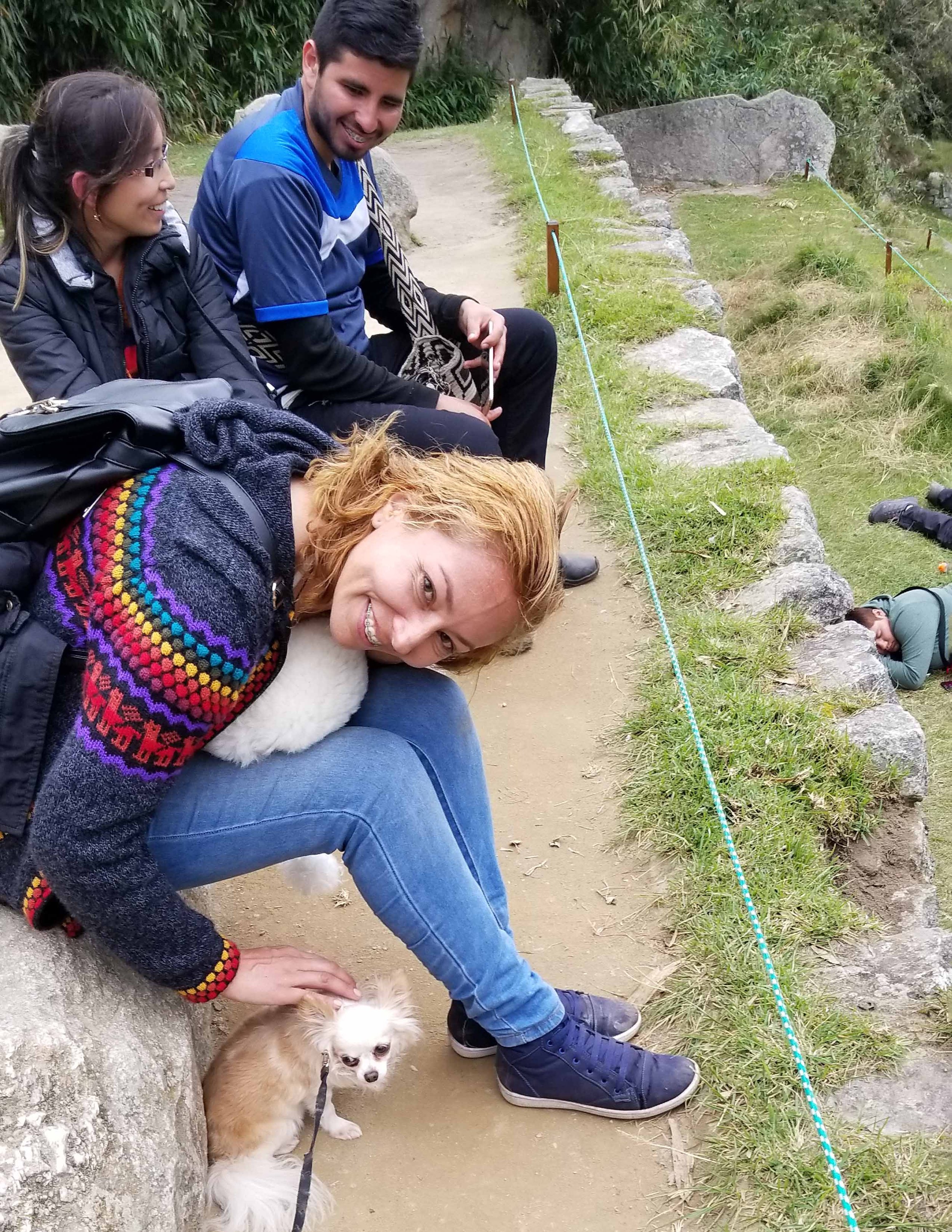
Then a ripple in the universe. Twink whipped her head around, stared like she saw danger, and growled under her breath.
No more than 25 meters away a man in a Red Shirt. A ranger. He stood no more than 25-meters away.
Twinkles didn’t overreact. It was simply her cue to alert me to a potential threat. But nobody panicked. We kept our cool—especially the dog.
The ranger could have thrown the rulebook at us. Instead, he looked at Twinkles, then at the small congregation gathered around her. He saw the joy. The positive energy. She wasn’t disrupting anything. She wasn’t a threat.
He didn’t glare. He didn’t approach.
He simply walked away.
The rules made no distinction: dogs didn’t belong in Sacred City. But the ranger without saying a word, affirmed THIS DOG, TWINKLES, belonged.

Miss Twinkles Gets AN INVITATION to Belong
When we returned to Machu Picchu Pueblo at the base of the Citadel, all I remember is the calm.
After a day of nonstop adrenaline, I could finally breathe—finally process what I thought was the end of one of the greatest days of my life.
“WE DID IT, TWINKLE! MACHU IMPOSSIBLE!”
Exhausted, we walked slowly toward the train station.
My phone rang. It was our hotel—the people who, even during our short stay, had come to know and love Twinkles.
“Mr. Corr, you and Twinkles—your train has been changed.”
In my travel experience, that is rarely a promising start.
“You have been upgraded to... THE HIRAM BINGHAM for your journey home. It leaves in, um... 30 minutes. Just go to the lounge. They will be ready for you.”
I nearly dropped the phone.
“¿Qué? The fucking Orient Express of South America? Named after the dude who introduced the Sacred City to the world? Christ, Twinkle, this is reserved for the world’s elite!”
What had begun as a frivolous, bootstrapped aventura would end in the lap of luxury: white tablecloths, spacious seating—even a bar car alive with a brass band.
Aboard the Hiram Bingham, we were no longer suspects on the run.
We were ROYALTY.
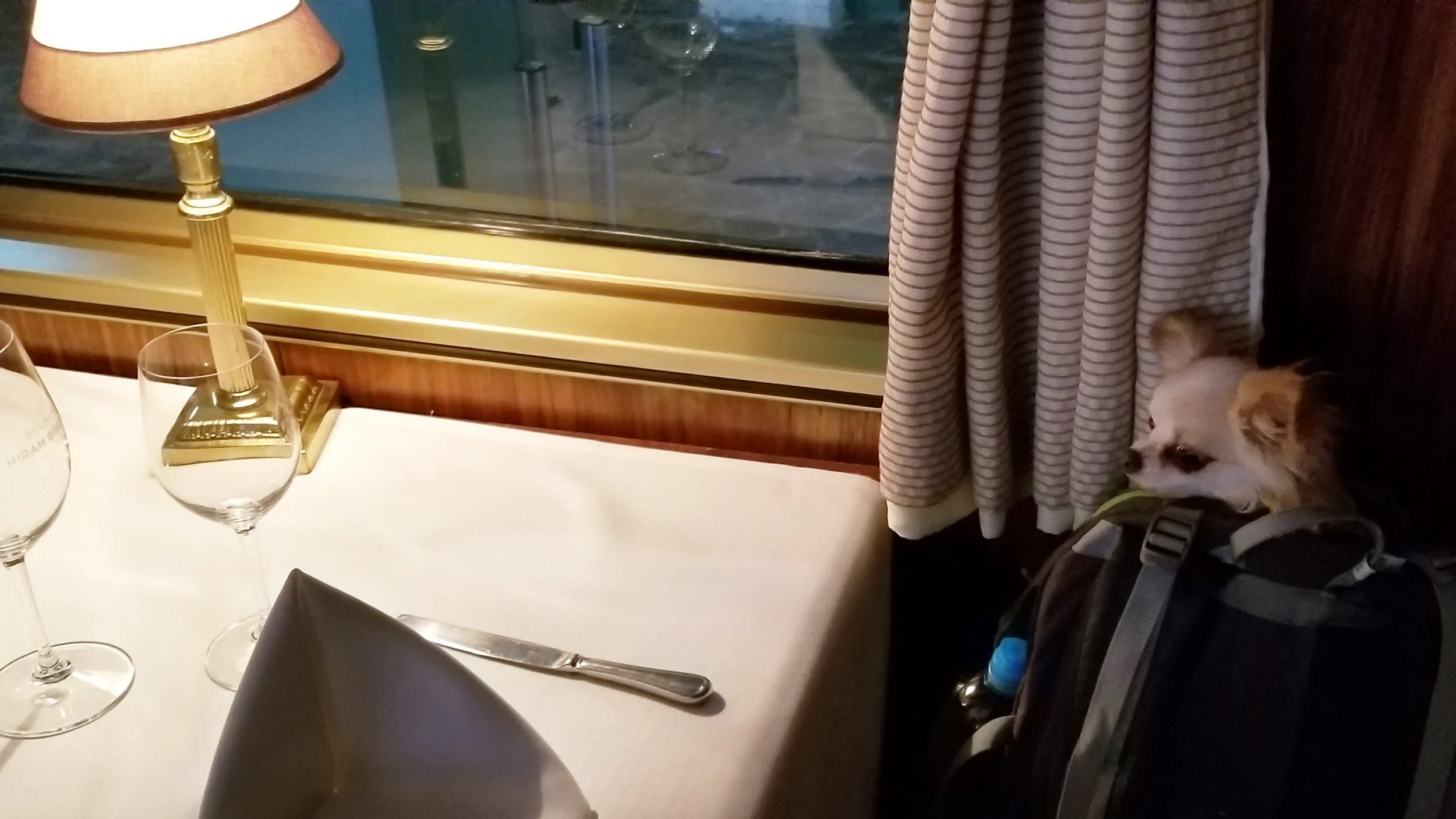
“We are so proud to have you aboard the Hiram Bingham Mr. Corr and Miss Twinkles. It looks like you both had a wonderful day at The Sacred City. This evening, we are proudly serving duck as our main course.”
Twinkles had heard ‘Get the ducks’ hundreds of times at the park. As he presented the plate, Twinkles emerged from the backpack.
“¿Qué? Duck?!”
“I love chasing them. Finally, I get to EAT one!”
“Disfruta, La Princesa. You earned it.”
Twinkles had never needed an invitation to know she belonged.
Now at last, the invitation had caught up with her!